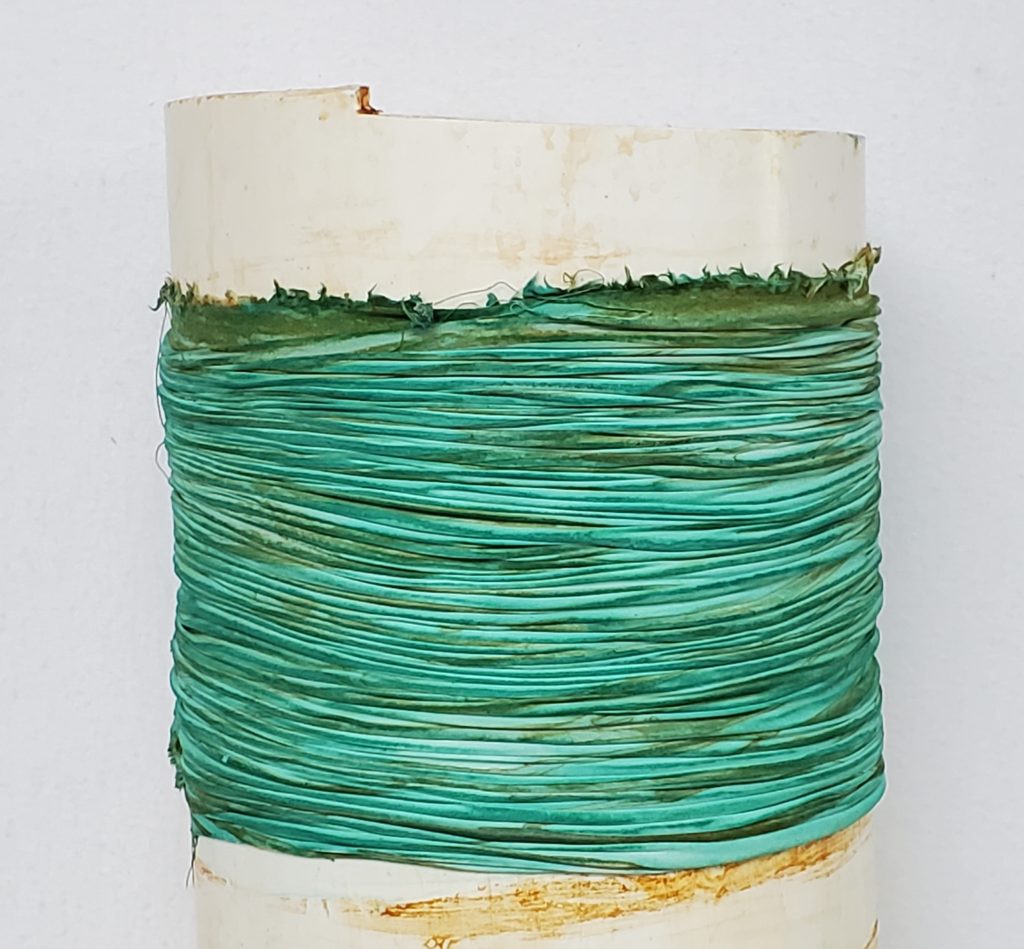
What Your Art Samples Can Teach You
Not every experiment in the studio needs to become finished artwork.
Sometimes a sample has already done its job. It answered a question, showed you how a material behaves, or gave you a result you may want to return to later.
That doesn’t mean the sample has stopped being useful.
Why I Keep My Samples
I keep most of my experimental samples rather than discarding them when I’m finished exploring an idea. They hang in a closet in my studio, along with notes about the materials I used and a basic overview of what I did.
The notes aren’t intended to be complete formulas. They’re there to jog my memory.
When I return to a sample, I have more than a written description of what happened. I can see the actual color, feel how the fabric changed, examine the marks, and notice details that would be difficult to capture in notes.
Together, the sample and the notes become a record of the experiment.

You Don’t Have to Document Everything
I don’t always stop in the middle of an experiment to record exact measurements. When I’m absorbed in what I’m doing, I’m usually looking at the result and deciding what I want to try next. Stopping to document every detail can interrupt that process.
For me, it’s more useful to record enough information to help me remember the exploration later.
The physical sample fills in some of the gaps.
And, over time, individual samples become something larger: a working reference library.
I can revisit an old experiment when I’m considering a color combination, wondering how a particular material behaved, or thinking about a process I haven’t used for a while. What I learned from one exploration can become useful months or even years later in a completely different piece.
That changes how I think about the samples that never become finished artwork.
They aren’t unfinished projects waiting for me to do something with them.
They’re part of the knowledge I’ve accumulated by making things.
And sometimes, keeping what you learned is enough.